Pickleball has quickly become one of the fastest-growing sports in the country, especially around Lake Wylie and the greater Charlotte area. It’s easy to learn, social, and provides a great mix of movement, coordination, and competition. But like any sport that involves quick direction changes, repetitive motions, and bursts of speed, injuries can happen—especially as play frequency increases.
The good news is that many of the most common pickleball injuries are manageable and often preventable with the right approach. Chiropractic care focuses on restoring proper movement, improving function, and supporting the body’s natural ability to heal—making it a practical option for active adults who want to keep playing without unnecessary downtime.
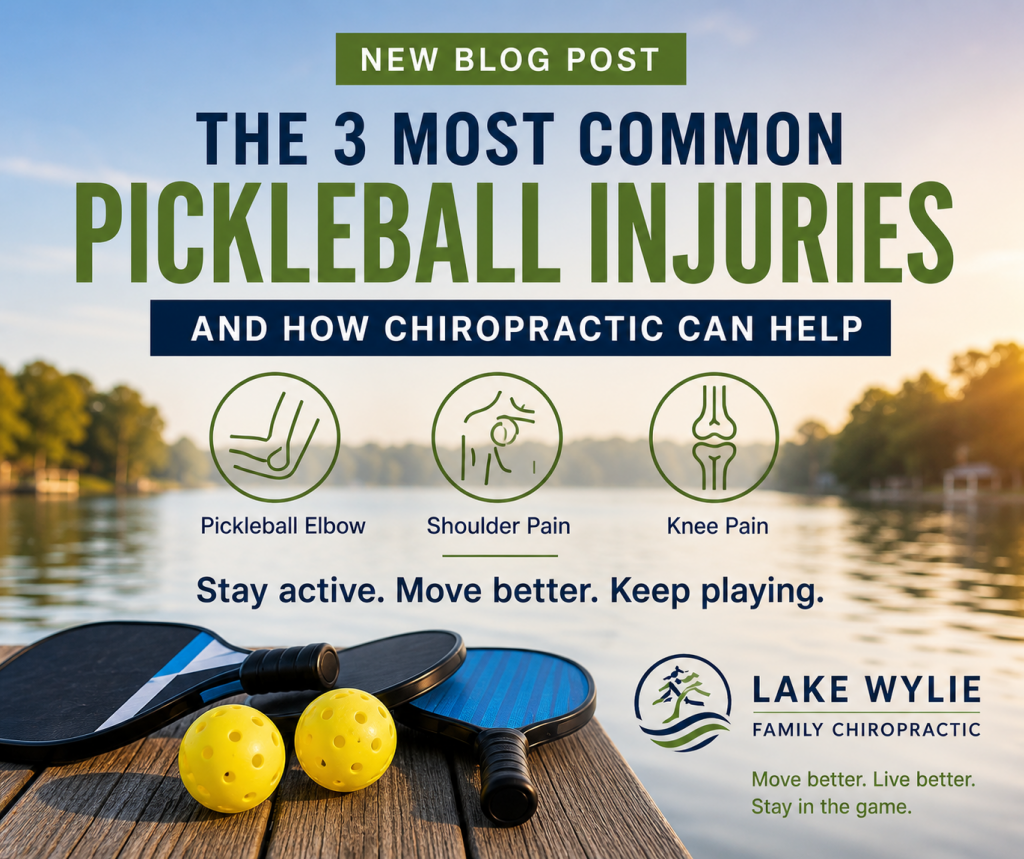
Below are the three most common pickleball injuries and how a chiropractic approach may help.
1. Pickleball Elbow (Tennis Elbow)
What it is
Despite the name, “tennis elbow” is extremely common in pickleball players. It refers to irritation or strain of the tendons on the outside of the elbow, typically caused by repetitive gripping and wrist extension during shots like backhands and volleys.
Why it happens in pickleball
Pickleball involves a lot of quick, repetitive paddle movements—especially if you’re playing multiple games in a session. Add in factors like improper grip size, overuse, or poor mechanics, and the stress on the forearm tendons increases significantly.
Common symptoms
- Pain on the outside of the elbow
- Weak grip strength
- Pain when lifting objects or shaking hands
- Discomfort during or after play
How chiropractic care may help
A chiropractic approach doesn’t just look at the elbow—it looks at the entire chain of movement. Often, elbow pain is influenced by how the shoulder, wrist, and even neck are functioning.
Care may include:
- Joint mobility work to improve movement in the wrist, elbow, and shoulder
- Soft tissue techniques to address tight or irritated forearm muscles
- Movement assessment to identify faulty mechanics contributing to strain
- Rehabilitation exercises to strengthen supporting muscles and improve endurance
By improving how the arm moves as a unit, stress on the elbow can often be reduced, helping players return to the court more comfortably.
2. Rotator Cuff Strain (Shoulder Injury)
What it is
The rotator cuff is a group of muscles and tendons that stabilize the shoulder. In pickleball, these structures can become irritated or strained from repetitive overhead shots, serves, and fast-paced swings.
Why it happens in pickleball
Even though pickleball courts are smaller than tennis courts, the shoulder still works hard—especially during serves, overhead smashes, and quick reaction shots at the net. If the shoulder lacks stability or proper coordination, it can lead to overuse and irritation.
Common symptoms
- Shoulder pain, especially when lifting the arm
- Weakness or fatigue in the shoulder
- Pain when reaching overhead or behind the back
- Limited range of motion
How chiropractic care may help
Shoulder pain is rarely just a “shoulder problem.” It’s often influenced by posture, spinal mobility, and how the shoulder blade moves.
Chiropractic care may focus on:
- Improving upper back and neck mobility, which supports proper shoulder function
- Restoring shoulder joint mechanics to reduce strain during movement
- Addressing muscle imbalances between the front and back of the shoulder
- Guided strengthening exercises to improve stability and control
When the shoulder moves more efficiently and is supported by a stable upper body, the risk of repeated irritation tends to decrease.
3. Knee Pain (Including Meniscus Irritation and Tendon Strain)
What it is
Knee pain in pickleball players often comes from repetitive stress, quick pivots, and sudden stops. This can lead to irritation of structures like the meniscus, patellar tendon, or surrounding muscles.
Why it happens in pickleball
Pickleball requires frequent lateral movement, quick direction changes, and short bursts of acceleration. If the hips and ankles aren’t moving well, extra stress gets transferred to the knees.
Common symptoms
- Pain around or inside the knee
- Stiffness, especially after playing
- Discomfort when squatting, lunging, or climbing stairs
- Occasional clicking or swelling
How chiropractic care may help
A key principle in chiropractic care is that joints don’t work in isolation. Knee pain is often influenced by how the hips and ankles are functioning.
Care may include:
- Improving hip mobility and strength, which reduces stress on the knee
- Restoring ankle movement, helping with proper foot positioning and balance
- Joint-based care for the knee to support normal motion
- Functional movement training to improve stability during play
When the entire lower body moves more efficiently, the knee often experiences less strain during quick movements on the court.
Why These Injuries Keep Coming Back
One of the biggest frustrations for pickleball players is that injuries tend to return—even after rest. That’s because rest alone doesn’t always address the underlying cause.
Common contributing factors include:
- Limited joint mobility
- Muscle imbalances
- Poor movement patterns
- Overuse without proper recovery
- Equipment issues (like paddle grip size or shoe support)
Chiropractic care focuses on identifying and addressing these root causes rather than only managing symptoms.
Staying Active Without Slowing Down
Pickleball is meant to be fun, social, and energizing—not something that leaves you sidelined. Many players around Lake Wylie are playing several times per week, which makes recovery and movement quality even more important.
A proactive approach can make a big difference:
- Warm up before playing (especially shoulders, hips, and ankles)
- Stay consistent with mobility and strengthening exercises
- Pay attention to early signs of discomfort
- Avoid pushing through pain that alters your movement
Chiropractic care can be part of that proactive plan, helping keep your body moving the way it was designed to.
A Practical, Conservative Approach to Care
At Lake Wylie Family Chiropractic, the goal is to help patients stay active and doing what they enjoy—whether that’s pickleball, boating, or spending time with family. Care is centered around improving movement, supporting recovery, and helping the body function at its best using natural, conservative methods.
If you’ve noticed elbow, shoulder, or knee discomfort during or after pickleball, it may be worth having your movement assessed before it turns into something that keeps you off the court.
Final Thoughts
Pickleball’s popularity isn’t slowing down anytime soon, and for good reason—it’s a great way to stay active and connected. But like any sport, it places specific demands on the body.
The three most common injuries—pickleball elbow, shoulder strain, and knee pain—are often linked to how the body moves as a whole. Addressing those movement patterns can make a meaningful difference in both performance and comfort.
With the right approach, many players are able to continue enjoying the game they love while reducing the risk of recurring issues.