
Cervical Neck Pain and Facet Syndrome: The Most Effective Exercises for Lasting Relief
Cervical neck pain is one of the most common conditions affecting adults today, especially in active communities like Lake Wylie where people balance work, family, and outdoor activities. A major but often underdiagnosed cause of this pain is cervical facet syndrome—irritation or dysfunction of the small joints in the neck that guide movement and provide stability
At Lake Wylie Family Chiropractic, many patients dealing with neck stiffness, pain with turning the head, or discomfort after activities like boating, yard work, or long hours at a desk are often experiencing facet-related issues. The encouraging news is that the most current peer-reviewed research consistently shows that targeted exercise—done correctly—is one of the most effective ways to reduce pain and restore normal movement.
This article outlines what cervical facet syndrome is, what the latest research says, and the most effective exercises for long-term relief.
What Is Cervical Facet Syndrome?
The cervical spine contains paired joints at each level called facet joints. These joints control motion such as turning, bending, and extending the neck. When they become irritated due to injury, repetitive strain, or poor posture, they can produce localized pain and restricted mobility.
Research shows that cervical facet joints may account for up to 36%–67% of chronic neck pain cases, especially when disc-related causes are ruled out. This makes them one of the most significant contributors to persistent neck pain.
Common symptoms include:
- Pain when turning the head
- Stiffness, especially in the morning
- Pain after prolonged sitting or looking down
- Discomfort radiating into the shoulders or upper back
- Relief when changing positions
Facet syndrome is often mechanical, meaning movement patterns—not just inflammation—drive the problem.
Why Exercise Is the Most Effective Treatment
Modern research has shifted strongly toward active care as the foundation of treatment for neck pain. While passive treatments may provide short-term relief, exercise addresses the underlying cause.
Recent randomized controlled trials and systematic reviews highlight three major findings:
1. Deep Cervical Stabilization Is Critical
The deep cervical flexor muscles play a key role in stabilizing the neck. When these muscles are weak or not functioning properly, larger surface muscles take over, increasing stress on the facet joints.
Research shows that targeted activation of these deep stabilizers leads to:
- Reduced pain
- Improved range of motion
- Better functional outcomes
2. Mobility and Stability Must Work Together
Restricted joints change how the neck moves. Before strength can fully improve function, normal motion must be restored.
This combination of:
- Controlled mobility
- Precise stabilization
is consistently shown to produce better outcomes than general exercise alone.
3. Movement Quality Matters More Than Intensity
The most effective programs use low-load, controlled exercises focused on coordination and endurance—not heavy strengthening.
This is especially important for facet syndrome, where excessive force can aggravate symptoms.
Best Exercises for Cervical Facet Syndrome (Research-Based)
The following exercises are supported by current peer-reviewed evidence and clinical guidelines. They are commonly used in structured rehabilitation programs.
1. Chin Tucks (Deep Cervical Flexor Activation)
This is the most important exercise for cervical stability.
How to perform:
- Sit or lie down with your spine neutral
- Gently pull your chin straight back (not down)
- Hold for 5–10 seconds
- Repeat 8–12 times
Why it works:
This activates deep stabilizing muscles and reduces stress on the facet joints.
2. Controlled Neck Mobility
Improving movement helps reduce stiffness and distribute forces more evenly.
Movements to include:
- Rotation (turning head left/right)
- Side bending
- Gentle flexion and extension
Guidelines:
- Move slowly and with control
- Stay within a comfortable range
- Perform 8–10 repetitions per direction
3. Scapular Stabilization
The shoulder blades and neck function together. Poor shoulder mechanics increase strain on the cervical spine.
Effective exercises:
- Resistance band rows
- Shoulder blade squeezes
- Prone Y and T raises
Benefits:
- Improves posture
- Reduces forward head position
- Decreases load on cervical joints
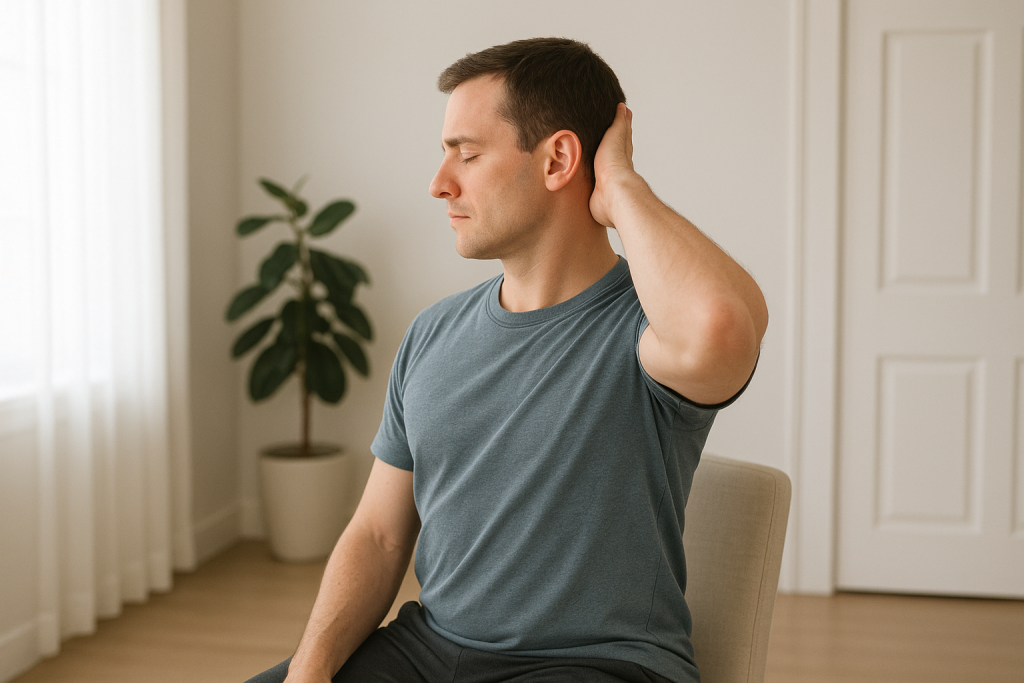
4. Isometric Neck Strengthening
Isometric exercises strengthen the neck without excessive movement.
How to perform:
- Apply gentle resistance with your hand
- Hold in each direction (front, back, side) for 5–10 seconds
- Repeat 6–10 times
Why it works:
Builds stability while minimizing irritation of the joints.
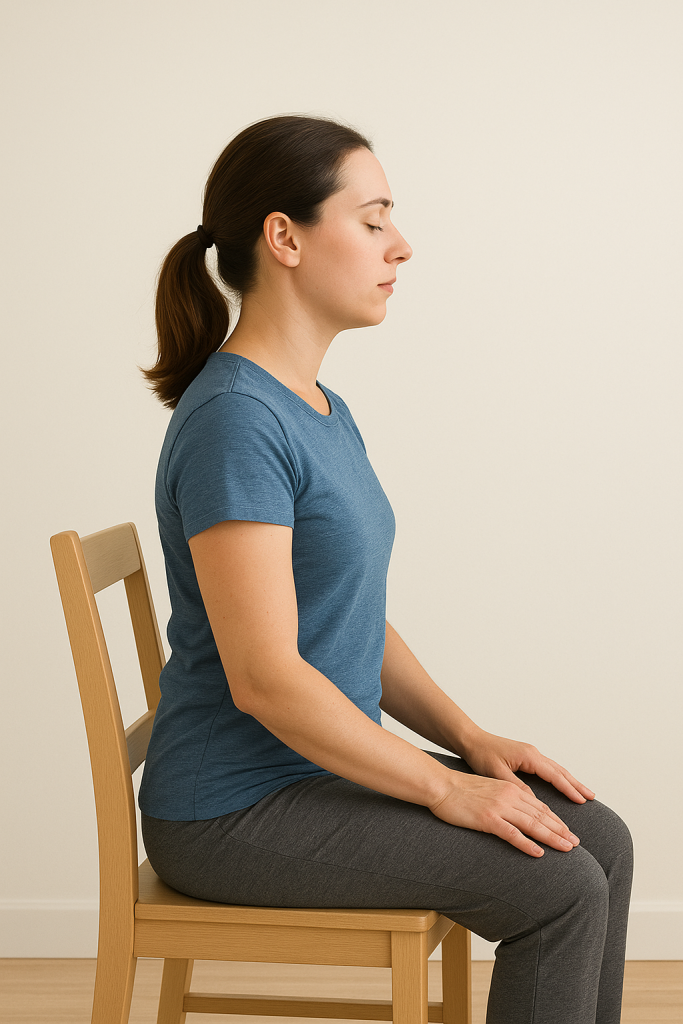
5. Postural Endurance Training
One of the biggest contributors to facet syndrome is sustained poor posture.
Simple strategy:
- Align ears over shoulders
- Keep chest upright
- Hold for 20–30 seconds
- Repeat throughout the day
This helps retrain the body to maintain proper alignment during daily activities.
What the Research Says About Outcomes
Compared to passive treatments, exercise-based care consistently shows:
- Improved function
- Reduced recurrence of pain
- Better long-term outcomes
Interventional procedures such as injections or nerve treatments may provide temporary relief, but evidence suggests they do not address the underlying mechanical dysfunction.
Exercise, on the other hand, restores normal movement and stability—making it the most sustainable solution.
Common Mistakes That Delay Recovery
Many people unknowingly slow their progress by:
- Overstretching into pain
- Skipping stabilization exercises
- Using poor form during exercises
- Trying to progress too quickly
The key is controlled, consistent movement—not aggressive intensity.
How Long Does Recovery Take?
Most patients begin to notice improvements within:
- 2–4 weeks: reduced pain and stiffness
- 6–12 weeks: improved strength and function
- 3+ months: long-term stability and prevention
Consistency is the most important factor.
Why Local Patients in Lake Wylie Experience This More Often
In areas like Lake Wylie, common lifestyle factors contribute to cervical facet stress:
- Long commutes or desk work
- Boating and recreational activities
- Yard work and home projects
- Frequent phone and screen use
These repetitive positions and movements can overload the cervical joints over time.
When to Seek Professional Help
While many cases improve with exercise, professional evaluation is recommended if:
- Pain lasts longer than 4–6 weeks
- Symptoms worsen over time
- There is radiating pain, numbness, or weakness
- The pain began after a car accident or injury
A structured program that combines hands-on care with targeted exercise often produces faster and more complete results.
Cervical Neck Pain Treatment in Lake Wylie
At Lake Wylie Family Chiropractic, care focuses on identifying the underlying cause of neck pain and creating a personalized plan that includes:
- Targeted mobility work
- Stabilization exercises
- Postural correction strategies
- Conservative, non-drug treatment approaches
This approach aligns with the latest research and is designed to not only reduce pain but also prevent future flare-ups.
Key Takeaways
- Cervical facet syndrome is a leading cause of chronic neck pain
- Deep cervical stabilization exercises are essential for recovery
- Mobility, strength, and posture must all be addressed
- Exercise provides better long-term results than passive treatments alone
- Consistency and proper technique are critical
References (Peer-Reviewed & Clinical Sources)
- Cohen SP. Epidemiology, diagnosis, and treatment of neck pain. Mayo Clinic Proceedings. 2015.
- Côté P, et al. The burden and determinants of neck pain. European Spine Journal. 2008.
- Jull G, et al. A randomized controlled trial of exercise and manipulative therapy for cervical headache. Spine. 2002.
- Falla D, et al. Deep cervical flexor muscle dysfunction in neck pain. Journal of Electromyography and Kinesiology. 2004.
- Blanpied PR, et al. Neck Pain Clinical Practice Guidelines Revision 2017. Journal of Orthopaedic & Sports Physical Therapy.
- Dunning J, et al. Upper cervical and thoracic manipulation vs mobilization and exercise in neck pain. Journal of Orthopaedic & Sports Physical Therapy. 2012.
- Gross AR, et al. Exercises for mechanical neck disorders. Cochrane Database of Systematic Reviews.
- Recent RCT: Effects of cervical stabilization exercises on pain and ROM in chronic neck pain patients. PubMed Indexed Study (2022).
- Bogduk N. Cervical facet joint pain and whiplash-associated disorders. Spine.
- Manchikanti L, et al. Systematic review of cervical facet joint interventions. Pain Physician Journal.